

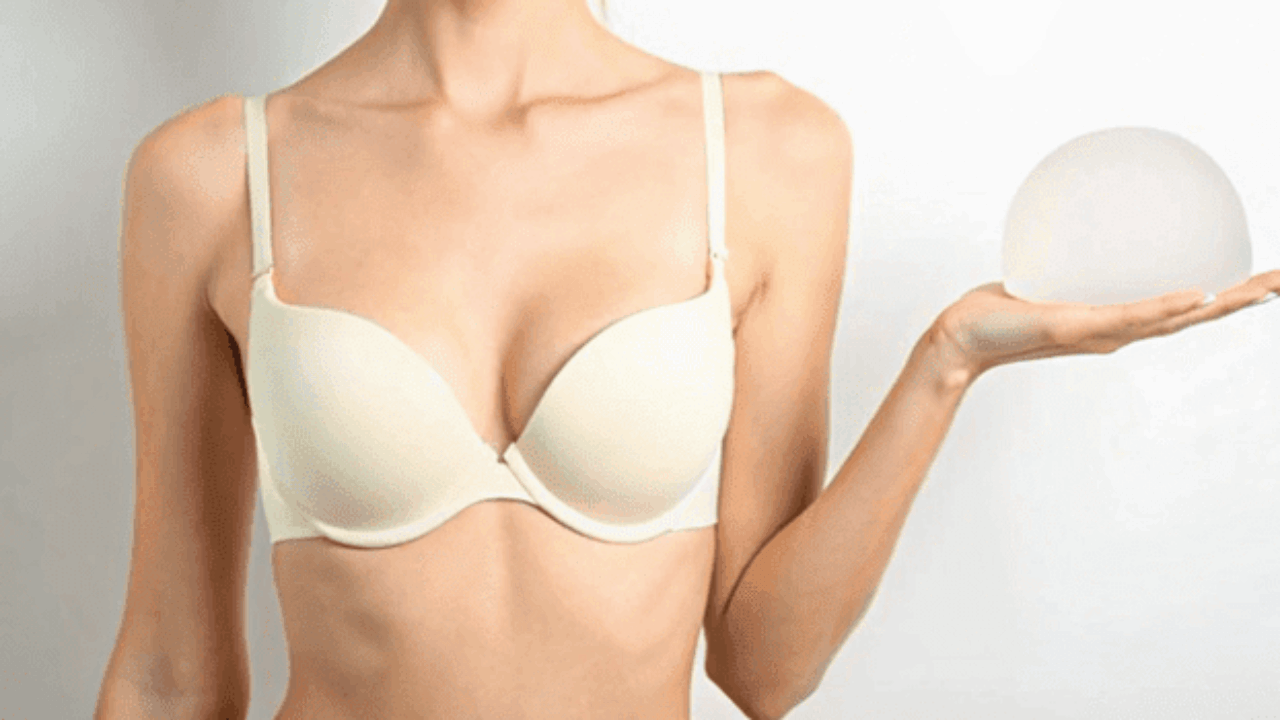
“To achieve a more voluminous breast appearance, breast implant surgery is performed, but prompting cleavage, an understandable desire, is all about individual anatomy, potentially accentuated when supported by upper-pole fullness and wearing a low-cup top that equally reveals the décolletage!”
Introduction:
First of all, many of us believe that breast implants for cleavage are the most requested option that aesthetically fulfills the most understandable desire to enhance cleavage. But there is a difference between having cleavage and how cleavage can be achieved. Of course, breast implant surgery can help accentuate the cleavage, but it cannot reliably eliminate the natural gap between the breasts or guarantee cleavage without a bra. You still need push-up bras to flaunt them, and once you achieve your upper pole fullness, projection, and increased breast volume, it significantly helps enhance cleavage. However, it is more accurate to say that cleavage requires increased breast volume, achieved either as a standalone procedure with breast implants or combined with autologous fat transfer. Moreover, increased volume alone does not guarantee accentuated décolletage, as several factors influence cleavage, including individual anatomy, natural breast spacing, existing breast tissue, chest-wall structure, implant dimensions, and surgical planning.
What is cleavage?
Cleavage is a sharp division or split between your breasts that is sometimes referred to as a hollow or depression. Cleavage is important for flaunting the silhouette, curves, or shape of your breasts, which are often considered desirable characteristics of a woman’s breasts. Sometimes, the cleavage can be accentuated with augmentation surgery, but sometimes, due to one’s underlying chest anatomy or poor placement planning, the desire for cleavage can be compromised. However, you need to know your profile first to determine the best option and the surgical technique that matches your desires and aesthetic goals.
Can Breast Augmentation Give You More Cleavage?
A breast augmentation is one of the most requested plastic surgery procedures in Beverly Hills and Newport Beach, CA. Also known as augmentation mammoplasty or breast enlargement, it is performed to increase the shape, size, and fullness of the breasts using implants or fat transfer. However, the increased volume, fullness, and projection of the breasts can potentially help enhance cleavage. But the individual’s anatomy, existing breast tissue, the natural space between both breasts, the implant dimensions, and surgical planning can play a pivotal role in achieving the desired cleavage. Moreover, it is not always true that implants alone play a crucial role in achieving cleavage, as the space between the breasts typically will not improve their medial cleavage with implants alone. One must note that implants are placed to enhance the volume of the breasts and achieve the aesthetic contour and shape, filling out the breasts laterally. Still, they cannot fundamentally alter the anatomy to bring your breasts closer together. But still, there is some good news: breakthrough interventions in breast augmentation surgery, such as combining a fat transfer with your breast augmentation surgery to enhance cleavage, and, of course, only an expert, board-certified plastic surgeon like Dr. Jay Calvert can help improve patients’ outcomes, which again may vary from one individual to another based on their natural anatomy, implant choices, surgical technique, goals, and postoperative care. Thus, adding implants won’t necessarily improve cleavage, but it definitely helps increase upper-pole and inner-quadrant fullness, which makes the space between the breasts look more aesthetically contoured.
Here are the top seven myths and facts a patient must understand when considering breast augmentation surgery.
Myth 1# Bigger breast implants always create more cleavage.
Fact: Choosing larger implants is connected with increased breast volume, fullness, and projection, and can only be a single factor affecting breast appearance. But this does not guarantee prominent cleavage because several other factors also contribute to cleavage, including breast width, chest-wall dimensions, the distance between the breasts, and the amount of existing breast tissue. Thus, an individual’s anatomy has a crucial role in achieving the desired cleavage, and apart from the patient’s breast profile, external factors, including the surgeon’s planning for the surgery, as well as implant dimensions, also play an important role in meeting the desired cleavage goals. Keep in mind that two implants with the same volume may have different base widths and projections, producing different aesthetic outcomes. Patients should understand that implant size and volume directly affect cleavage, but implant dimensions matter just as much as volume. Moreover, an implant size that is too large for the patient’s anatomy can stretch the surrounding tissues and create a less balanced appearance with the rest of the body.
Myth 2# Breast Implants Can Eliminate the Space Between the Breasts.
Fact: When evaluating breast augmentation surgery options, it is inevitable to understand the aesthetic limitations of implants so that you can keep realistic expectations and get a clear idea of what an implant can actually do. Having breast implant surgery, of course, helps enhance fullness, contour, projection, and desired volume. Still, it does not help eliminate the natural gap between the breasts or guarantee cleavage if your anatomy and implant positioning do not support it. Breast implants can increase fullness, which may change the appearance of the central chest area, but they do not fundamentally alter the underlying chest wall structure. Moreover, attempting to prompt cleavage by positioning the implants too close together can require excessive disruption of the tissue that separates the breasts, which can increase the risk of symmastia, an uncommon but significant complication in which an aesthetic space between breasts is lost, and the breasts appear connected across the midline.
However, a careful assessment and responsible surgical planning by an expert breast augmentation surgeon like Dr. Calvert are prioritized, focusing on implant positioning and appropriate tissue support rather than pursuing the narrowest possible cleavage.
Myth 3# High-Profile Implants Are Always Best for Cleavage
Fact: High-profile implants can increase forward projection, accentuating upper-pole fullness that may enhance cleavage. Still, this is not the only factor in determining cleavage. Thus, higher-profile implants are best for desired volume, but they cannot compensate for anatomical limitations that influence cleavage.
To achieve an aesthetic outcome concerning accentuated cleavage, the following points must be evaluated:
- Chest width: The implant must fit the patient’s breast dimensions.
- Existing breast tissue: The contoured appearance and implant edges are highly influenced by tissue coverage. Furthermore, the implant’s edge determines how close your breasts sit, which in turn influences cleavage.
- Implant positioning: The surgical pocket and surrounding tissues influence the final breast contour.
Myth 4# Breast Augmentation Automatically Creates Upper-Pole Fullness
Fact: Breast augmentation surgery, whether performed with implants or fat transfer, of course helps increase volume, fullness, and shape of the breasts. As a result, the upper pole, the upper part of the breasts above the nipples, achieves aesthetic fullness and enhanced projection, resulting in a fuller appearance in the upper breasts. Although the improvement is typically subtle to moderate (about 0.5 to 1 cup size) rather than dramatic, the amount of upper pole fullness each individual receives may vary based on existing tissue, breast shape, implant characteristics, and placement. But breast augmentation surgery alone may not be enough to create upper pole fullness because patients with significant breast sagging caused by weight change, pregnancy, breastfeeding, or aging may also require evaluation for breast lift surgery. However, implants help enhance volume but do not correct substantial drooping or reposition a low-lying nipple on their own. Moreover, appearance also changes with body position, clothing, or bra choice. Cleavage seen in a push-up bra does not necessarily reflect the breast shape without support.
Myth 5# Implant Placement Does Not Affect Cleavage
Fact: Implant placement plays a major role in how cleavage looks after surgery, as it can affect tissue coverage, implant visibility, breast contour, and how the breast appears over time. One must note that there is no single technique that guarantees ideal cleavage for every patient, as the selection of implant technique is highly influenced by the patient’s anatomy and the surgeon’s assessment. In addition, placing implants above the muscle can create more pronounced cleavage, and if you need to place implants under the muscle, choosing a higher-profile implant or adding fat transfer can enhance cleavage while still respecting anatomy.
Myth 6# Breast Augmentation Results Look the Same on Every Body
Fact: Breast augmentation results vary by individual anatomy, including chest width, breast base diameter, natural asymmetry, skin elasticity, tissue thickness, and breast position. Since breast implant surgery is a highly individualized procedure, choosing the specific placement technique is significantly influenced by the width of the patient’s breast, their existing tissue thickness, implant dimensions, and the safe boundaries of the surgical pocket. As a result, outcomes can vary from patient to patient; even if two patients receive implants of the same volume, they may see different changes in projection and cleavage because their starting anatomy differs. Moreover, weight change, pregnancy, aging, or gravity can also influence how the breast appears after surgery. So, before-and-after photos can help you understand a surgeon’s aesthetic approach, but another patient’s results cannot predict your exact outcome. The key point is that the same implant can produce different results in different patients, and that’s why outcomes vary based on anatomy and the surgeon’s approach.
Myth 7# Cleavage After Breast Augmentation Should Be Visible Without a Bra
Fact: Of course, breast augmentation surgery enhances cleavage by adding fullness, and the central contour can be significantly more pronounced. But still, some patients may need push-up bras or garments with supportive construction if the space between their breasts is too wide or they lack natural contact or forward projection in the center, which can make cleavage less pronounced without proper support. Thus, cleavage appearance depends on the natural distance between the breasts, breast volume, chest-wall anatomy, implant characteristics, and breast position. Some patients may notice pronounced cleavage without supportive garments or push-up bras because their breasts have increased in volume. After breast augmentation, pronounced cleavage depends heavily on natural chest anatomy (such as ribcage shape and sternum width), implant size and profile, and how the surgical pockets were built.
Conclusion:
Discuss your aesthetic goals with your breast augmentation surgeon, whether you want a more defined neckline in clothing, enhanced upper-pole volume, closer-set cleavage without support, or improved fullness. Because every patient is unique in anatomy and aesthetic goals, the augmentation approach can be customized to achieve the most natural-looking outcome possible. One may be recommended for breast augmentation and breast lift as a paired procedure known as an augmentation mastopexy if they have concerns about breast sagging and volume loss at the same time, and the appropriate customization of the procedure depends on the starting anatomy.